5 Common ADHD Adjustments (And How to Make Them Actually Work)
5 Common ADHD Adjustments
(And How to Make Them Actually Work)
If you've ever written "extra time" into a plan and then watched a student still hand in half a page... you're not alone, and you're definitely not doing it wrong.
The adjustments we reach for first — extra time, rest breaks, movement breaks, fidget tools — aren't bad ideas. They're just often too broad to do their job. A good adjustment needs an edge to it: a clear start, a clear finish, and a clear "this is what success looks like." Without that, even the most well-intentioned support can land flat.
Let's go through five of the most common ADHD adjustments, why they sometimes don't work the way we expect, and how to make each one targeted enough to actually help.
1. Extra Time
Why it's not enough on its own:
Extra time assumes the barrier is speed. For a lot of kids with ADHD, the real barrier is something different: difficulty sensing and using time to guide what they're doing in the moment. Clinical psychologist Dr Russell Barkley, who has spent decades researching ADHD, describes this as "time blindness" — a kind of near-sightedness to the future that makes open-ended time feel shapeless and hard to act on. Giving a student more of something they already struggle to track and use doesn't fix the problem. It just stretches it out.
How to make it targeted:
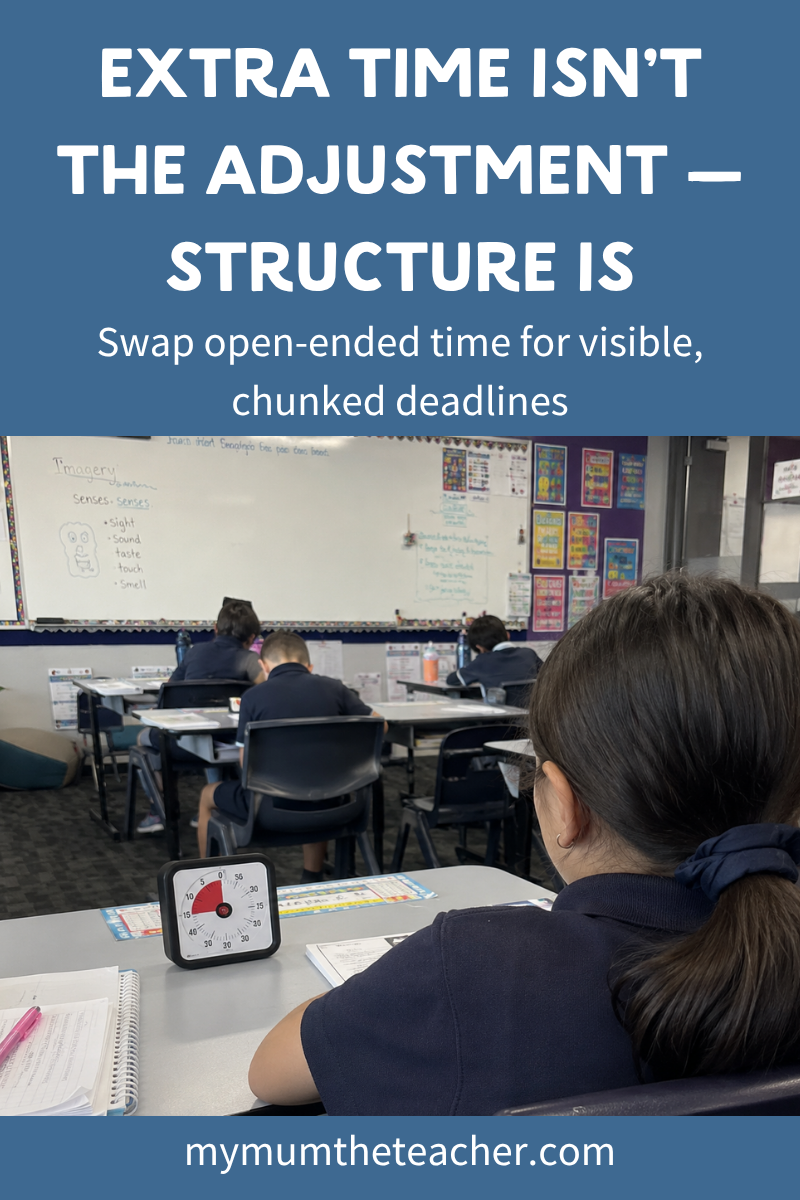
Break the task into smaller chunks, each with its own mini deadline
Use a visible, externalised timer for each chunk — not a vague "rest of the lesson"
Set a concrete finish line they can see and aim for ("3 paragraphs," not "as much as you can")
Check in at each chunk, not just at the end
This lines up with what Dr. Barkley calls "externalising" time — using tools outside the student's head (timers, visual countdowns, checklists) to do the job their internal clock struggles with.
2. Rest Breaks
Why it's not enough on its own:
"Take a break if you need one" sounds supportive, but it puts the entire job of recognising overwhelm, deciding to act, and asking for help onto a student whose executive functioning is already working overtime. By the time many students ask for a break, they're already past the point where a break helps.
How to make it targeted:
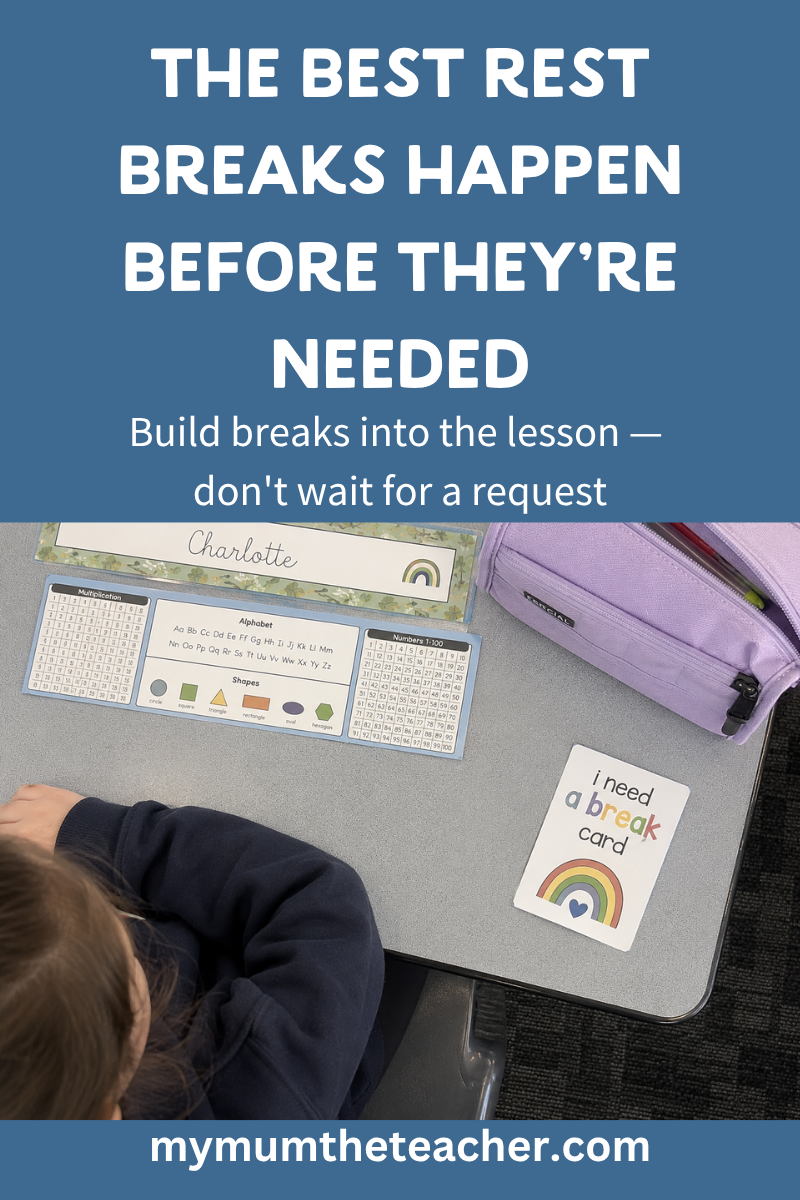
Sue Larkey, an Australian special education specialist, talks about the power of preventative breaks — breaks that are scheduled before dysregulation hits, not requested after. That might look like:
A break built into the lesson structure at a set point, regardless of how the student seems to be coping
A visual or card-based system the student can use to signal "I need a break" without having to find the words in the moment
A clear, short timeframe for the break itself, so it doesn't become open-ended in the other direction
The goal isn't fewer breaks — it's breaks with structure, so they regulate rather than derail the lesson.
3. Movement Breaks
Why it's not enough on its own:
"Let them move around" is a good instinct, but movement breaks without a clear trigger or endpoint can become just as hard to manage as no break at all — both for the student returning to task, and for you managing the room.
How to make it targeted:
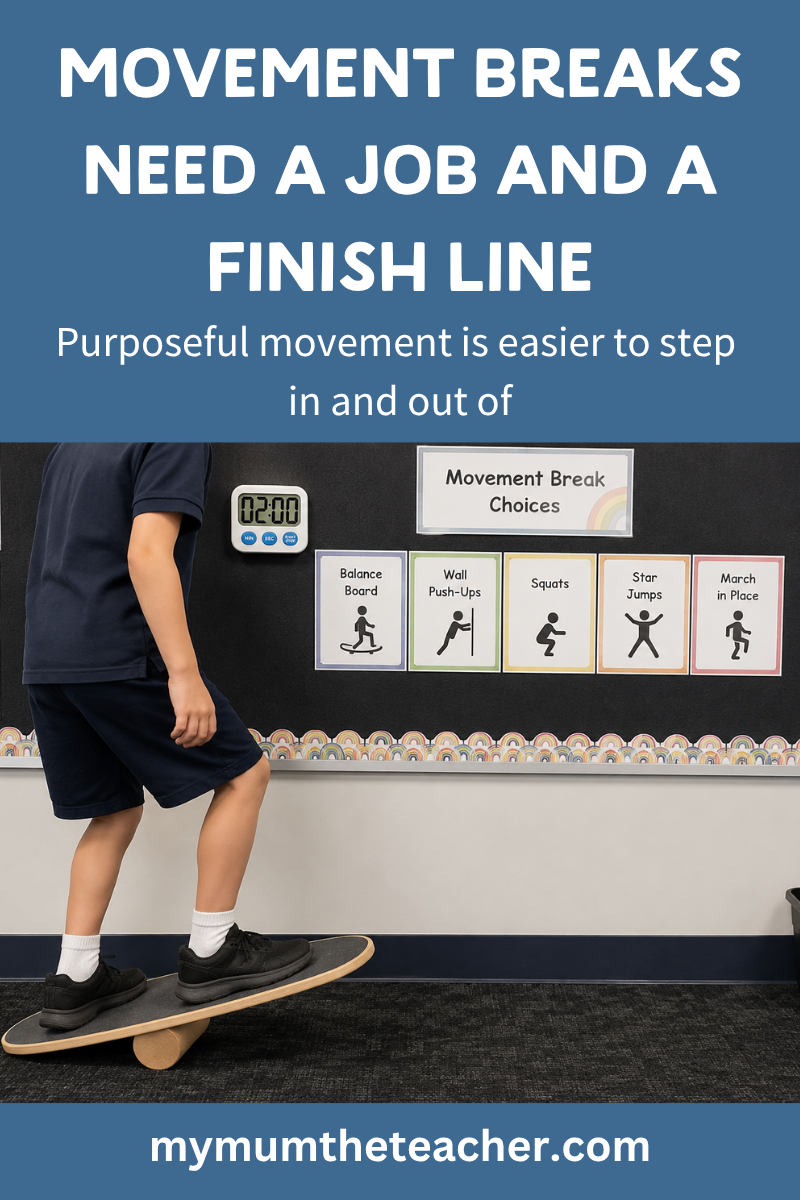
Tie the movement break to a specific point in the lesson (after instructions, before independent work), not an open invitation
Give it a job: a lap of the room to deliver something, a specific physical task — purposeful movement is easier to step in and out of than unstructured movement
Set a clear re-entry point: "When the timer goes, you're back at your desk for X"
Movement breaks work best when they have the same boundaries as any other adjustment on this list: a clear start, a clear job, and a clear finish.
4. Fidget Tools
Why it's not enough on its own:
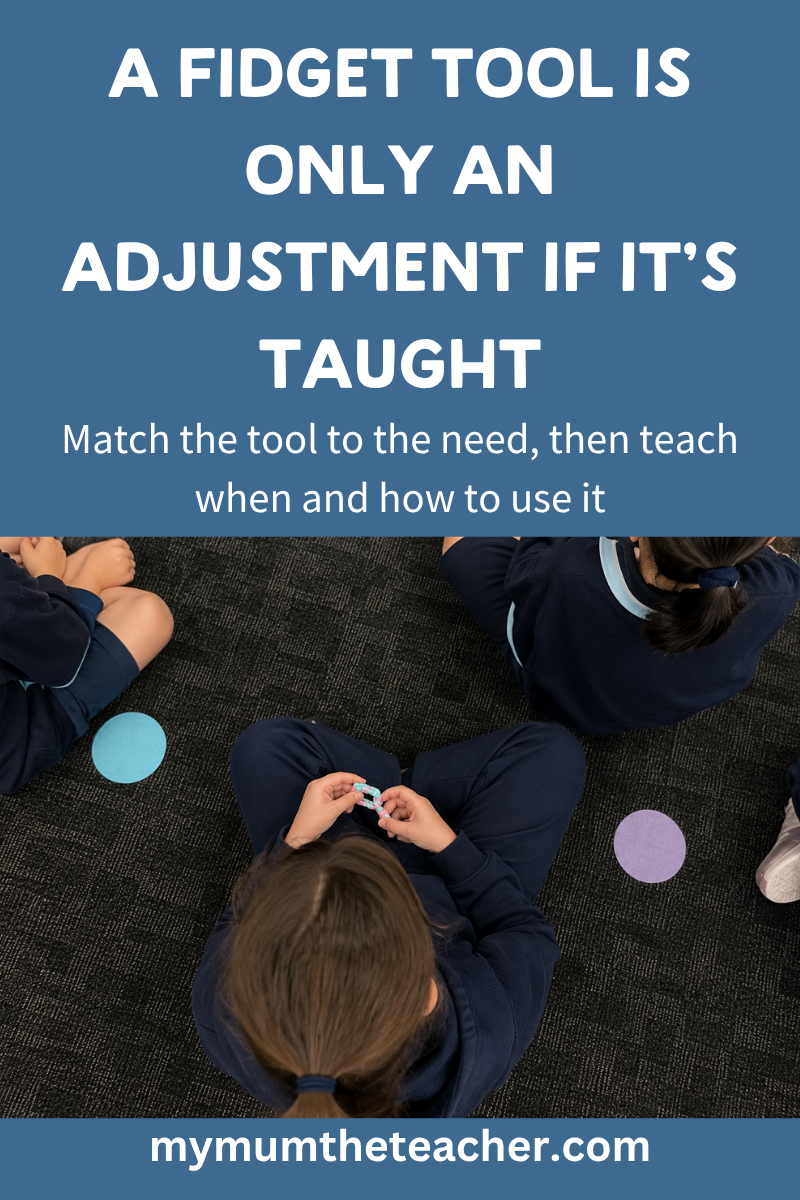
Handing a student a fidget tool without any teaching around it often leads to one of two outcomes: it becomes a toy, or it gets taken away the first time it's distracting — and then the adjustment quietly disappears from the plan.
How to make it targeted:
Dr Tony Attwood, whose work on autism and co-occurring anxiety is widely used across Australian schools, emphasises that sensory tools work best as part of a taught, intentional strategy — not a stand-alone object. In practice, that means:
Explicitly teaching when and how the tool is used (e.g. "in your hand during listening time, on your desk during writing time")
Choosing a tool matched to the actual need — calming versus focus-supporting fidgets aren't interchangeable
Monitoring whether it's actually helping, and swapping it out if it isn't
A fidget tool is an adjustment when it's taught and purposeful. Without that, it's just an object in a busy hand.
5. "Calm Down" or Self-Regulation Prompts
Why it's not enough on its own:
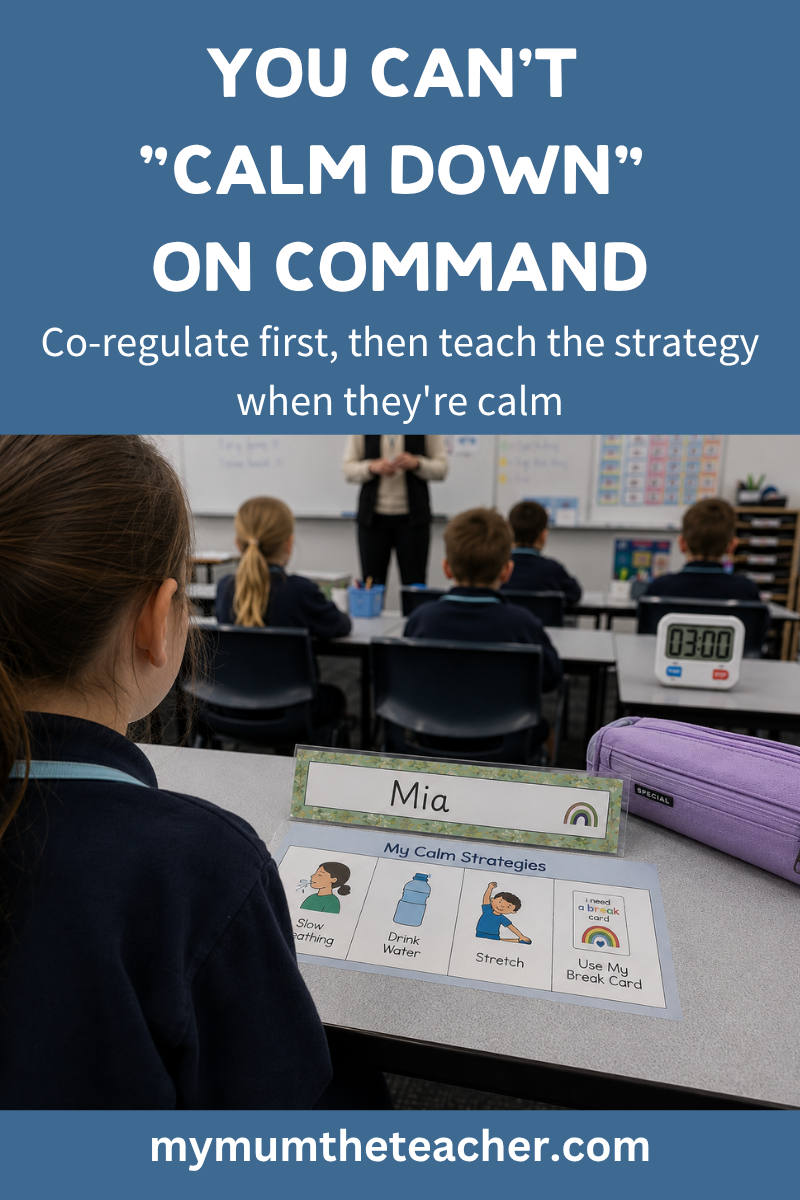
Telling a dysregulated student to "calm down" or "take a breath" asks them to use the exact skill that's currently offline. Self-regulation has to be built and practised before the moment it's needed — not introduced for the first time in the middle of it.
How to make it targeted:
Australian parenting and wellbeing author Maggie Dent talks often about co-regulation before self-regulation — the idea that students (especially younger or more dysregulated ones) need a calm adult or a known, practised strategy to regulate with, before they can do it alone. In the classroom, that might look like:
Teaching and practising a specific regulation strategy when the student is calm, so it's familiar before it's needed
Using a consistent, predictable adult response rather than a new instruction each time
Pairing the strategy with a visual reminder, so the student isn't relying on memory in a high-stress moment
The pattern across all five adjustments
Every one of these adjustments works the same way once you make it specific:
A clear trigger or starting point
A defined structure or boundary
A visible way to track progress
A concrete end point
That's the shift — from "here's some support" to "here's exactly what this looks like, every time."
None of these tools are magic on their own. What makes them work is exactly what we've talked about above — specificity. A timer only helps if it's tied to a clear chunk of work. A fidget tool only helps if it's taught. A break only helps if it's built in before things go off the rails, not requested after.
You're not failing when a broad adjustment doesn't land. You just needed it to have an edge.


