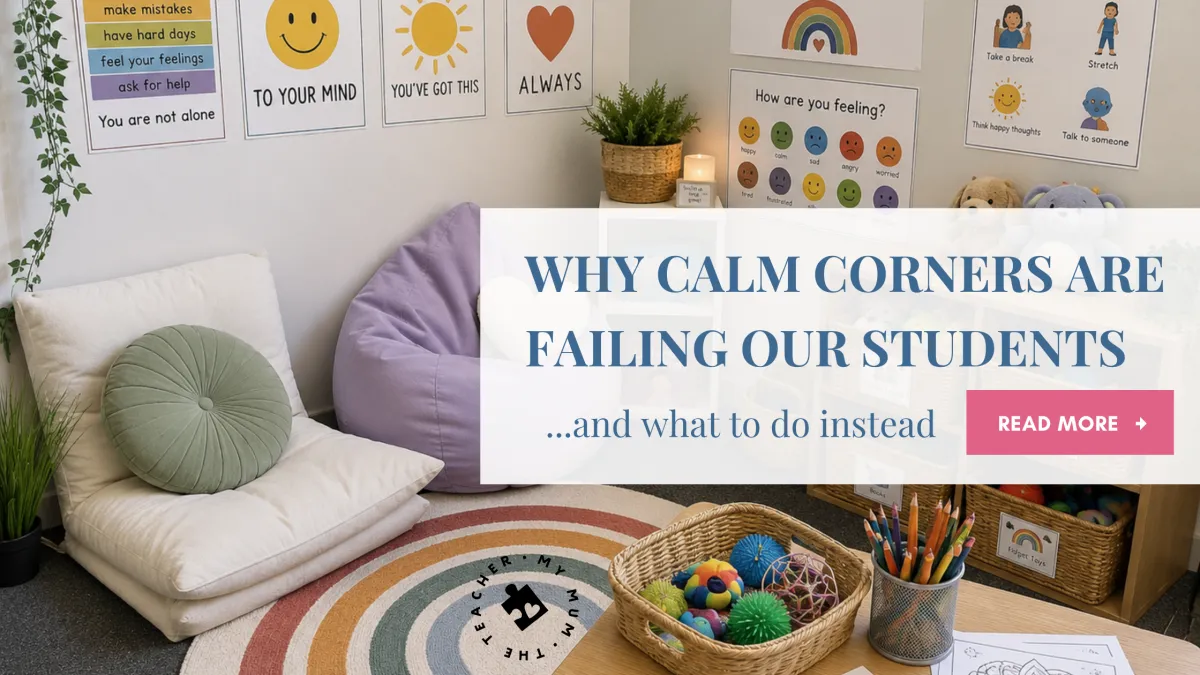
Why Calm Corners Are Failing Our Students (And What to Do Instead)
Why Calm Corners Are Failing Our Students (And What to Do Instead)
Walk into almost any preschool, primary classroom and OOSH space in Australia and you'll find one: a beanbag, a few fidget tools, maybe a poster of "feelings" scattered across a corner labelled calm down space.
Calm corners have become a staple of inclusive classroom design. They're well-intentioned, evidence-informed on paper, and easy to set up. So why are so many teachers quietly telling us they don't work?
The truth is, calm corners aren't the problem. How we use them is.
In this post, we'll unpack four common ways calm corners go wrong in real classrooms—and what to do instead, so the space actually supports regulation rather than undermining it.
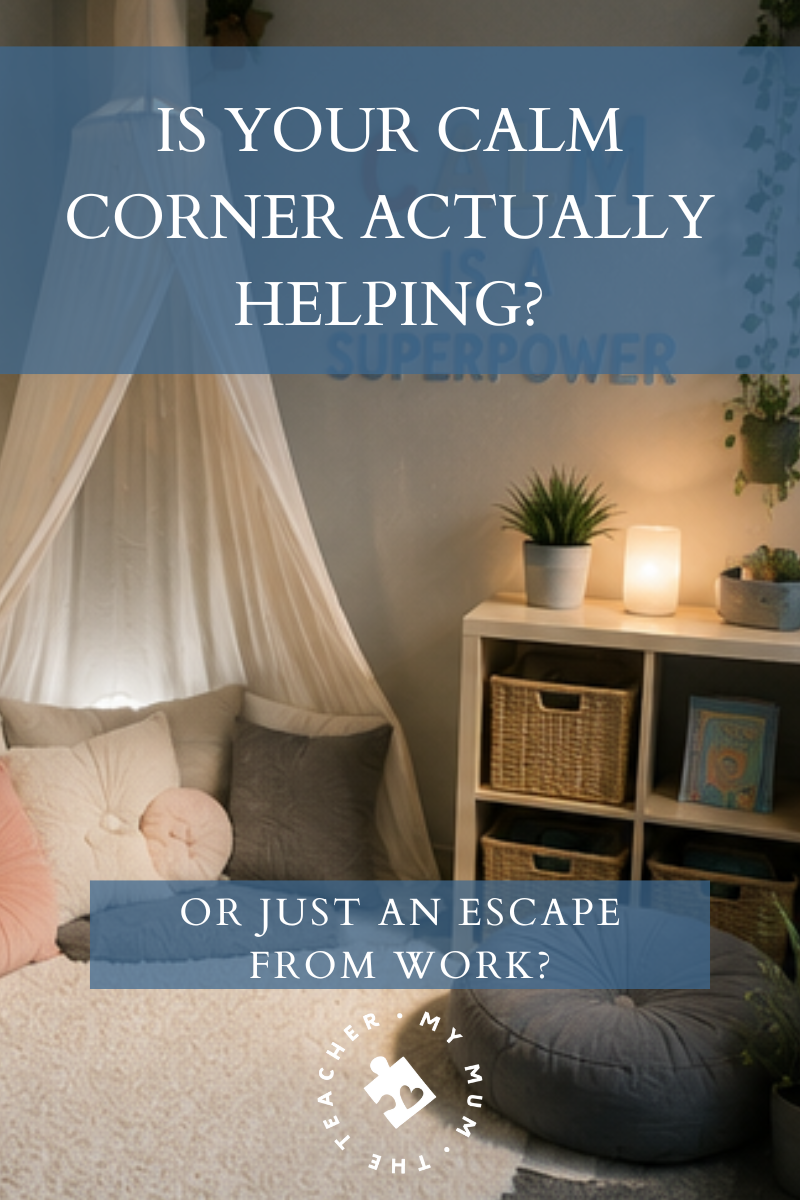
1. When the Calm Corner Becomes an Escape Hatch
A calm corner is meant to support regulation. In practice, it often becomes the easiest way out of a task a student finds difficult, boring, or overwhelming.
If a student learns that heading to the calm corner reliably gets them out of writing, maths, or a tricky social interaction, the space stops being about regulation. It becomes an avoidance strategy — and avoidance gets reinforced fast.
This isn't a failure of the child. It's a sign the environment, task, or expectations need adjusting before regulation becomes an issue.
What this looks like in the classroom:
A student asks for the calm corner every time writing starts
Time in the space consistently extends past what's needed to actually settle
The student returns to task avoidance, not calmer engagement
Instead, try:
Build in task-related breaks before dysregulation hits (proactive, not reactive)
Offer guided choice within the task, not just an escape from it — e.g., "Would you prefer to write two sentences or draw your idea first?"
Use a visual timer or clear re-entry expectation, so the space has a defined purpose and end point
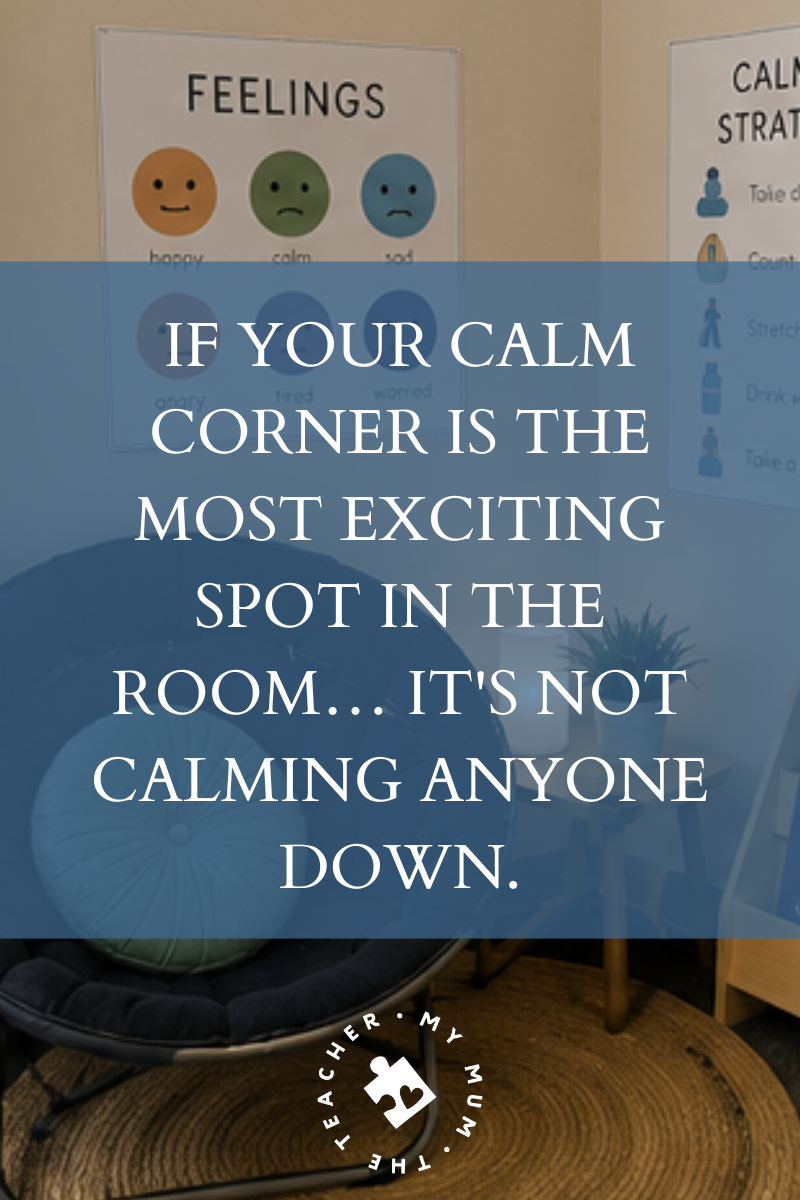
2. When the Calm Corner Becomes a Distraction, Not a Support
Sensory tools, soft furnishings, and visual displays can quickly turn a regulation space into the most interesting part of the room.
If the calm corner is more stimulating than calming, it's working against its own purpose — and often distracting the whole class, not just the student using it.
Signs the space has become a distraction:
Other students are watching, asking to visit, or losing focus because of what's happening in the corner
The tools available invite play rather than settling (e.g. toys, games, high-stimulation fidgets)
The space is visually busy, cluttered, or overstimulating
Instead, try:
Keep the space visually calm and uncluttered — muted tones, minimal signage, low visual load
Position the corner away from high-traffic areas or sight-lines that pull other students' attention
Rotate and limit tools rather than offering everything at once
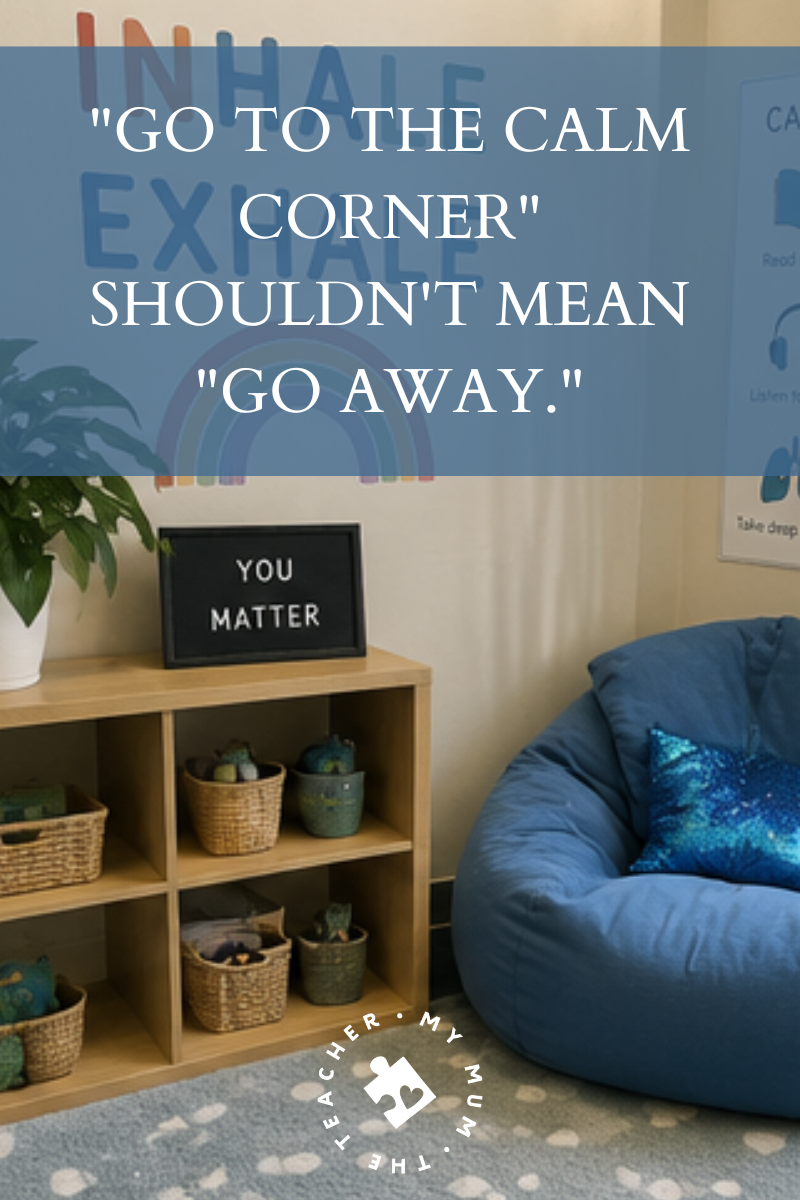
3. When "Calm Corner" Becomes Code for "Time Out"
This is one of the most common — and most damaging — shifts we see. A space designed for self-directed regulation slowly becomes a place students are sent, rather than a place they choose to go.
Once that shift happens, the calm corner stops being about co-regulation and self-regulation. It becomes a consequence. And a consequence dressed up as a wellbeing strategy sends a confusing, and sometimes harmful, message: your big feelings are a behaviour problem to be removed from the room.
Behaviour is communication. A regulation space should never function as exclusion in disguise.
Instead, try:
Reframe language from "go to the calm corner" to "would you like some space to reset?" — keep the choice with the student wherever possible
If a student is directed to the space, ensure it's paired with co-regulation and connection, not isolation
Regularly check: is this space being used with the student, or at the student?
4. When Regulation Skills Are Assumed, Not Taught
Here's the core issue underneath all of the above: a calm corner is a tool, not a curriculum.
Simply having a space doesn't teach a child how to notice rising emotion, what strategies help their nervous system, or how to use the tools available. Without explicit teaching, the space relies on students already having regulation skills — skills many students, especially those with trauma backgrounds or additional needs, haven't yet developed.
What explicit teaching looks like:
Whole-class lessons on recognising body signals of dysregulation (this can sit within PDHPE or wellbeing programs)
Modelling strategies out loud: "I'm feeling frustrated, so I'm going to take three slow breaths before I keep going"
Practising strategies when calm, not just introducing them in the moment of dysregulation
Individualised regulation plans for students who need more targeted support, developed in consultation with the student where possible
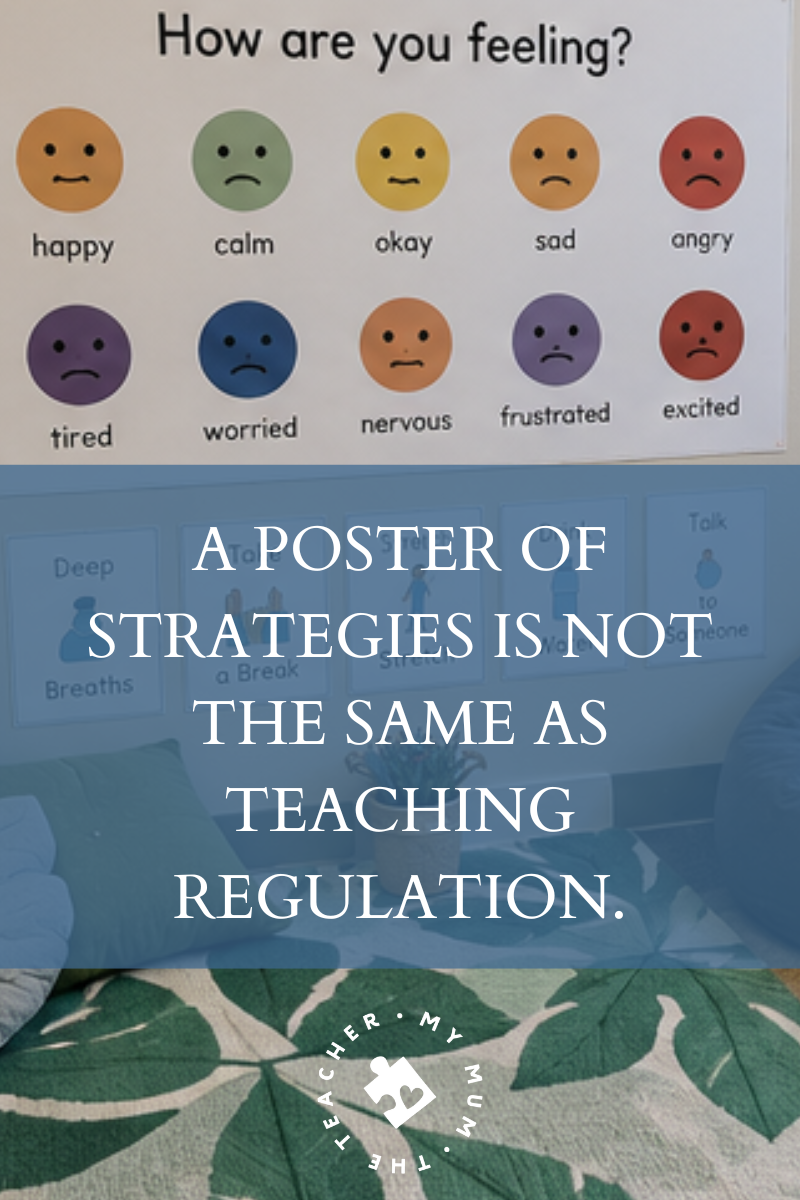
A poster of strategies on the wall is a prompt, not a lesson. If a student hasn't been taught what deep breathing, movement breaks, or sensory tools actually do for their body, they won't know how — or why — to use them.
5. When Sensory Tools Are Generic, Not Targeted
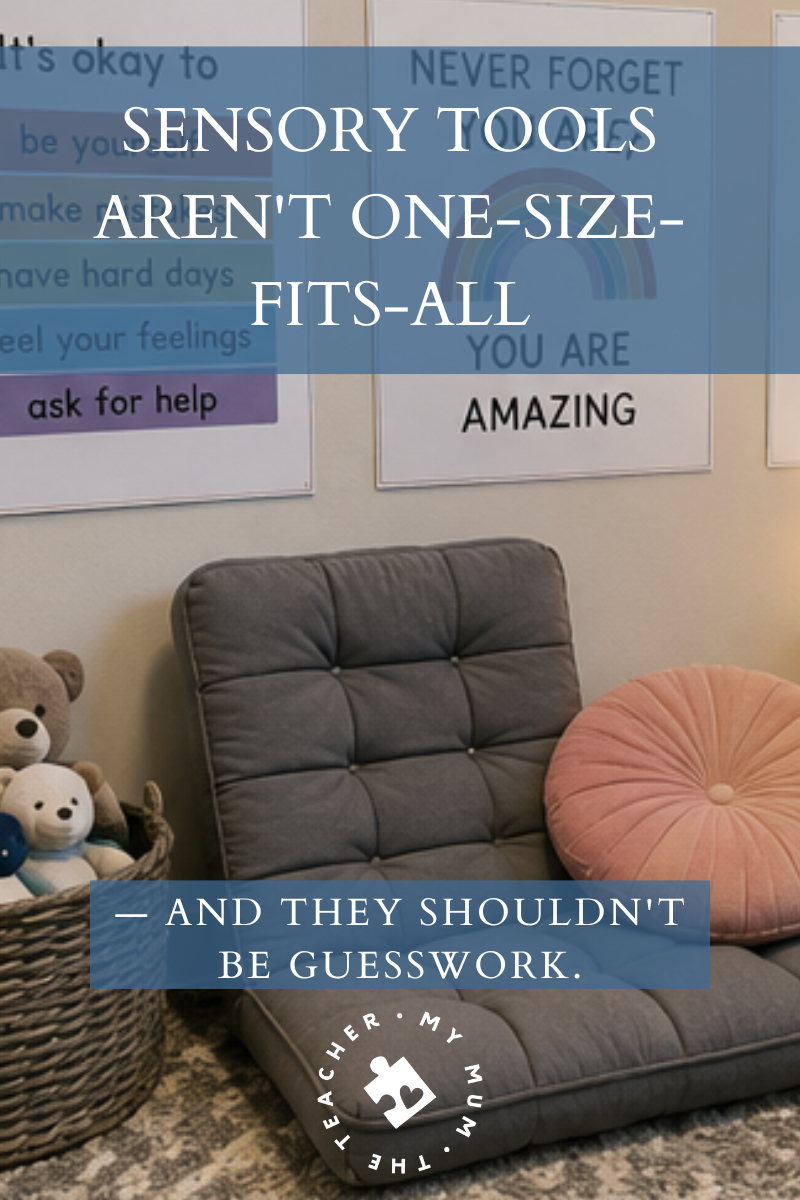
Fidget tools, weighted items, chewables, and sensory equipment are often added to calm corners without any link to individual student needs. This isn't just ineffective — it can be counterproductive.
Sensory needs are highly individual. A tool that helps one student regulate might overstimulate another. Used without guidance, sensory tools can become toys, distractions, or a source of conflict over sharing.
What to keep in mind:
Sensory tools work best when matched to an identified need, not offered generically
Occupational therapists (OTs) and other allied health professionals can help identify what a student's nervous system actually needs — input, output, calming, or alerting
A whole-class "sensory box" is rarely appropriate for students with specific sensory processing needs; individualised tools, informed by OT recommendations, are far more effective
Instead, try:
Where possible, collaborate with your school's OT or the student's external allied health team to select appropriate tools
Keep a small number of purposeful tools rather than a large, unstructured collection
Review and adjust tools regularly based on what's actually helping
Rethinking the Calm Corner: A Tier 1 Approach
None of this means calm corners should be scrapped. Used well, they can be a valuable part of a Tier 1, whole-class regulation strategy — but only when they sit within a broader, taught, and consistently modelled approach to regulation.
A calm corner works best when it is:
Explicitly taught, not just provided
Chosen by the student, not used as a consequence
Visually calm and low-distraction
Stocked with purposeful, needs-matched tools — ideally guided by allied health input
One part of a whole-class regulation approach, not a stand-alone fix
Final Thought
Calm corners aren't the enemy — but treating them as a set-and-forget solution is. Regulation is a skill, and like any skill, it needs to be explicitly taught, modelled, and practised, long before a student is expected to use it independently in a moment of big feelings.
If you're rethinking how regulation spaces work in your classroom, start small: teach one strategy explicitly this week, and watch how differently students respond when they understand why and how to use the space — not just that it exists.
Looking for practical, trauma-informed strategies to build regulation skills in your classroom? Explore more resources at My Mum, the Teacher.


